Crockery Cabinet & Dining Room Glass Partition Ideas for Ranchi Homes (2026 Designs & Costs)
Ammon Marketing
Authorized Kutchina Dealer · Ranchi
15 Apr 2026
~ read
TL;DR
- A glass partition between living and dining areas creates visual separation without blocking light — the most popular open-plan solution in Ranchi apartments
- A modular crockery unit with profile glass shutters and internal lighting costs ₹25,000–₹60,000 in Ranchi and transforms the dining space
- Frosted or fluted glass panels are preferred over clear glass for partitions — they maintain privacy while allowing light through
- Combining a crockery unit with the partition wall (storage + divider in one unit) is the most space-efficient solution for compact 2 BHK dining areas
Quick Answer: A glass and wood partition between the living and dining area in a Ranchi apartment costs ₹18,000–₹45,000 depending on size and glass type. A crockery display unit with profile glass shutters and internal LED lighting costs ₹25,000–₹60,000. Combining both into an integrated partition-plus-storage unit (₹40,000–₹85,000) is the most space-efficient solution.
Most 2 BHK and 3 BHK apartments in Ranchi have an open-plan living and dining area — a single long room that functions as both spaces. The challenge: how do you create a sense of dining room without a wall, without making the space feel smaller?
The answer for most Ranchi homeowners in 2026 is a partial glass and wood partition — often integrated with a crockery cabinet — that defines the dining zone while keeping light flowing between the spaces. This guide covers the design options, the practical decisions, and what each costs.
4 Types of Dining Room Partitions Popular in Ranchi
1. Glass and Wood Partition (Most Popular)
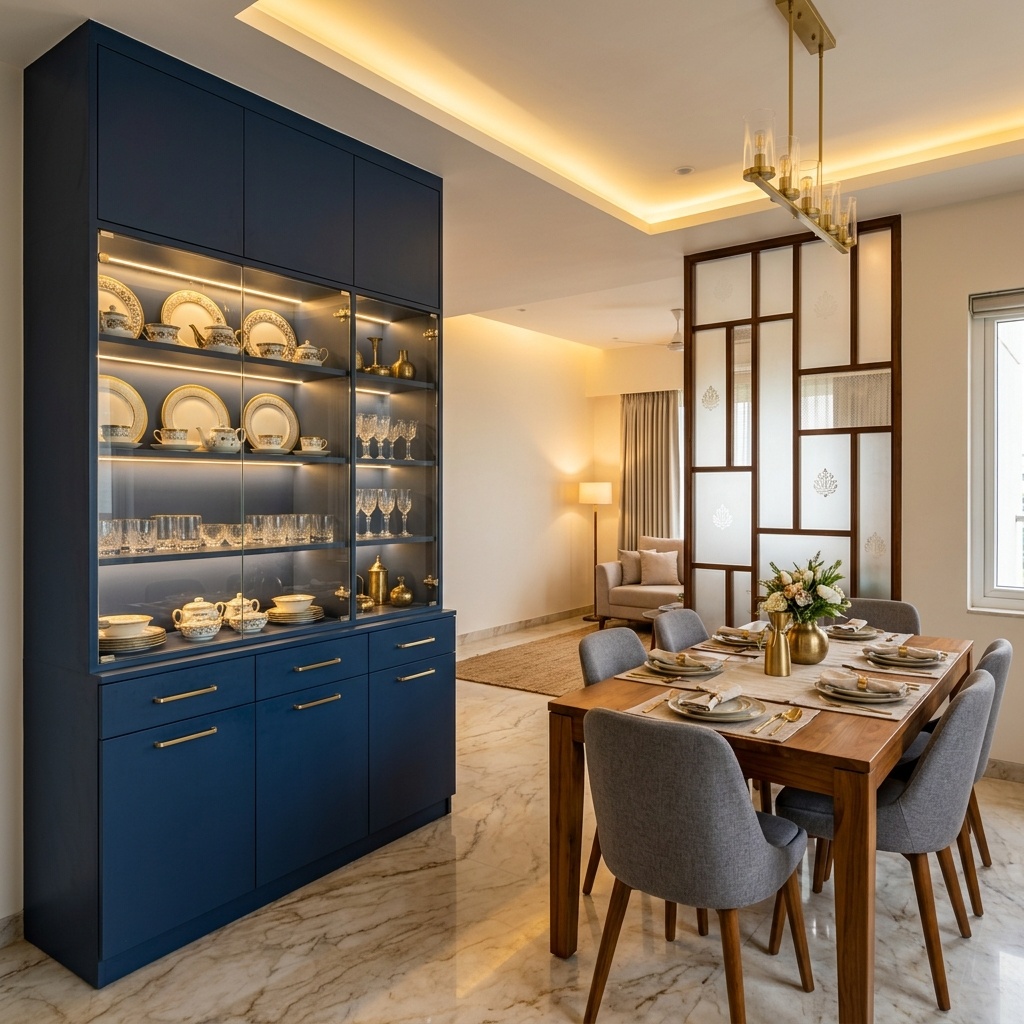
A partial-height partition (typically 120–150cm tall) with a solid wood or laminate base panel and glass panels above. The glass can be clear, frosted, fluted (ribbed), or tinted. The wood base grounds the partition and gives it weight; the glass allows light to flow between the living and dining areas. The top portion remains open above the partition height, keeping the ceiling continuous.
Best for: 2 BHK apartments where the living-dining area is 200–280 sq ft and you want definition without claustrophobia. Cost: ₹18,000–₹35,000 for a standard 6–8 ft partition.
2. Integrated Crockery Unit + Partition
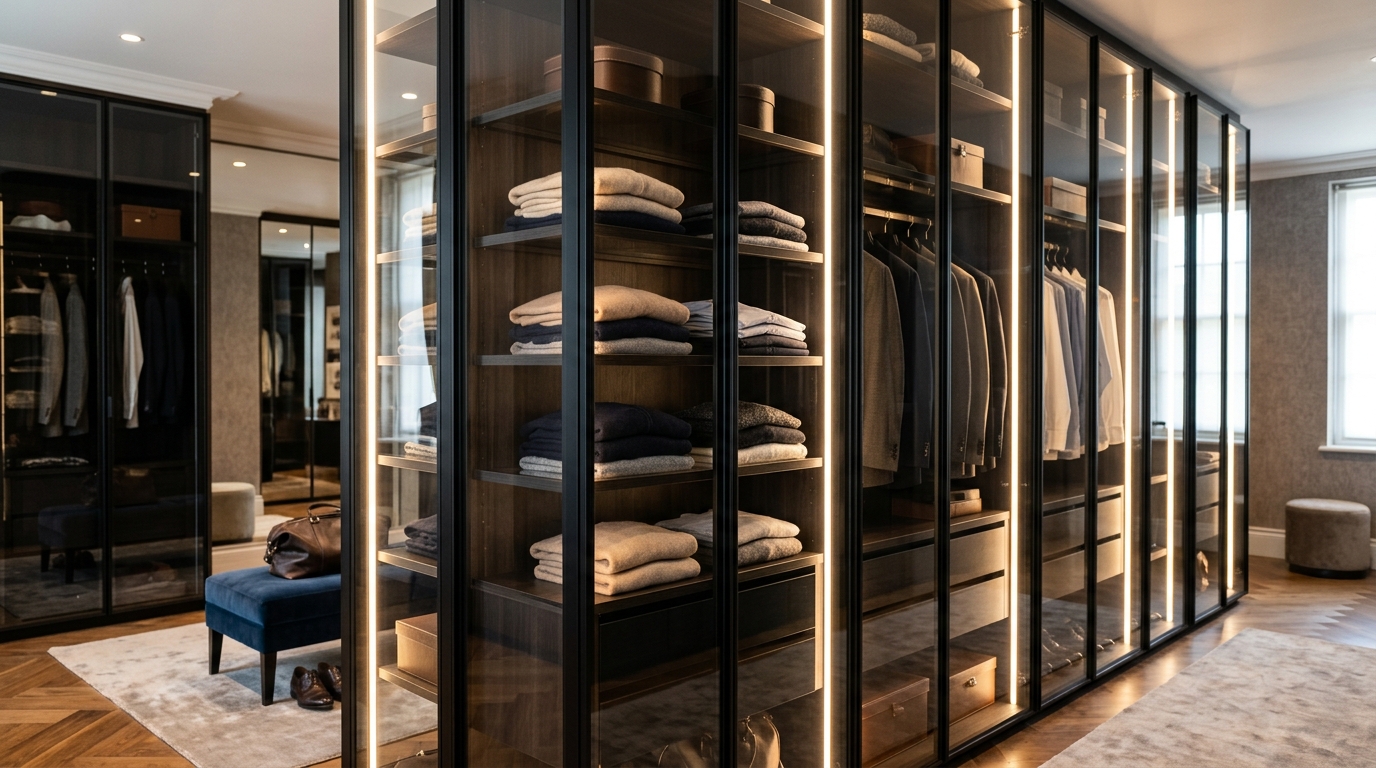
A floor-to-ceiling unit that serves simultaneously as a crockery display cabinet (dining room side) and a storage or TV unit (living room side). The partition function and storage function are combined in one unit, doubling the space efficiency. Glass shutters on the dining room face display crockery; closed or open shelves on the living room face serve a different purpose.
Best for: Homeowners who want both a partition and crockery storage but have limited space for separate furniture. This is the most popular configuration in Ranchi 2–3 BHK homes. Cost: ₹40,000–₹85,000.
3. Fluted Glass Panel Partition (2026 Trend)
A full or partial partition using fluted glass panels in aluminium or thin wood frames. Fluted glass (glass with vertical ribbed texture) allows light through while maintaining privacy — objects on the other side are visible as blurred silhouettes, not clearly. The ribbed texture also adds visual interest to the partition itself, making it a design element rather than just a divider. Cost: ₹22,000–₹45,000.
4. Wooden Jaali Partition
A carved or CNC-cut wood panel (MDF or solid wood) with a geometric or floral pattern that allows light to pass through the openings while providing a strong visual divider. Jaali partitions are the most traditional option but are seeing a revival in 2026 with geometric CNC patterns that blend traditional craftsmanship with contemporary aesthetics. Cost: ₹15,000–₹40,000 depending on pattern complexity.
Crockery Cabinet Designs for Ranchi Dining Rooms
A dedicated crockery cabinet in the dining room serves two purposes: displaying good crockery and glassware, and providing storage for items that would otherwise clutter the kitchen. In Ranchi homes, the crockery unit is often the dining room's focal point — and the design choices here have the same visual impact as the dining table itself.
Profile Glass Shutter Crockery Units
A profile glass shutter uses an aluminium profile frame (thin metal border) with a glass panel — clear, frosted, or fluted — as the door. The frame is lightweight, allows the contents to be visible, and gives the unit a contemporary look. Internal LED lighting (spotlights inside the cabinet, directed at the shelves) makes the crockery display look like a showroom. This is the most popular crockery unit style in Ranchi in 2026.
Open Shelving Crockery Display
Open shelves with no doors — crockery is displayed directly, visible from the dining room. This works beautifully if your crockery is well-organized and photogenic. It requires more discipline (everything is visible always) but creates the warmest, most casual atmosphere of all the options. The open shelving trend from café and restaurant design has entered Ranchi homes strongly since 2023.
Glass Panel Types: Which to Choose for Partitions and Crockery Units
| Glass Type | Privacy | Light Transmission | Best Use | Relative Cost |
|---|---|---|---|---|
| Clear glass | None | Maximum | Crockery display cabinets only | Lowest |
| Frosted glass | High | Good (diffused) | Partitions, bathroom-adjacent areas | Low |
| Fluted glass | Medium | Good (diffused) | Partitions, modern crockery units | Medium |
| Tinted glass (grey/bronze) | Medium | Reduced | Partitions where glare is a concern | Medium |
| Lacquered glass (back-painted) | Full (opaque) | None | Coloured panel inserts in units | Higher |
Cost of Crockery Unit and Partition in Ranchi (2026)
| Item | Specification | Price in Ranchi |
|---|---|---|
| Glass + wood partition (partial height) | 6–8 ft wide, 4–5 ft tall, frosted glass | ₹18,000–₹35,000 |
| Floor-to-ceiling glass partition | 6–8 ft wide, full ceiling height | ₹28,000–₹55,000 |
| Profile glass crockery unit (standalone) | 5–6 ft wide, floor-to-ceiling with 3–4 shelves | ₹25,000–₹45,000 |
| Integrated partition + crockery unit | Both functions in one unit, 6–8 ft wide | ₹40,000–₹85,000 |
| Wooden jaali partition (CNC pattern) | 6 ft wide, full or partial height | ₹15,000–₹40,000 |
| Internal LED lighting for crockery unit | LED spotlights + diffuser strips inside unit | ₹3,000–₹8,000 |
Frequently Asked Questions
How much does a glass partition cost in Ranchi for living and dining separation?
A glass and wood partial-height partition (4–5 ft tall, 6–8 ft wide) costs ₹18,000–₹35,000 in Ranchi. A full ceiling-height glass partition costs ₹28,000–₹55,000. An integrated partition-plus-crockery-unit that combines partition and storage functions costs ₹40,000–₹85,000 depending on size and glass type.
What type of glass is best for a dining room partition in Ranchi?
Fluted glass (ribbed texture) is the most popular choice for dining room partitions in Ranchi in 2026 — it provides partial privacy, allows light to pass through, and looks contemporary. Frosted glass is good where more privacy is needed. Clear glass works for crockery cabinet shutters but is impractical for partitions in open-plan areas.
Can I add a crockery cabinet to an existing dining room in Ranchi without major renovation?
Yes. A freestanding or wall-mounted crockery unit can be installed in any dining room without structural changes. Installation takes 1 day. The unit needs 2–4 wall anchor points (for stability) and a power point for internal LED lighting. No plumbing or major electrical work is required. Ammon Marketing can install in a standard dining room in a single day.
What is profile glass and why is it used in crockery units?
Profile glass shutters use thin aluminium frames (the "profile") with glass panels. The aluminium profile is typically 15–20mm wide, making it much slimmer than a standard wood door frame. This gives the cabinet a lighter, more contemporary appearance. The slim frame maximises the visible glass area, making crockery display more prominent. Both clear and fluted glass are used in profiles.
Should I use an open-shelf or glass-door crockery cabinet in my Ranchi home?
Open shelves look beautiful when crockery is well-organized and regularly arranged. They require discipline — everything is always visible. Glass-door cabinets (especially with profile glass) protect crockery from dust, which is a genuine concern in Ranchi during summer (March–June). For everyday crockery storage in Ranchi, glass doors are practical; open shelves work better for display-quality items only.
Can a glass partition make a small Ranchi apartment feel larger or smaller?
A glass partition makes a small apartment feel larger, not smaller. Clear or fluted glass allows the eye to travel through the partition, maintaining the sense of a connected space while defining the dining zone. A solid wall creates a hard visual boundary that makes each room feel smaller. This is why glass partitions have replaced solid walls in almost all Ranchi apartment renovations since 2020.
What internal lighting is best for a crockery unit in Ranchi?
LED spot lights mounted inside the cabinet (directed downward onto shelves) create the most dramatic display effect — crockery and glassware appear to glow. Warm white (2700–3000K) is recommended for a cosy, welcoming feel. LED strip lighting along the shelf edges is the alternative — less dramatic but more even distribution. Budget ₹3,000–₹8,000 for internal LED lighting in a standard unit.
Is a glass partition permanent or can it be removed later in a Ranchi apartment?
A glass and wood partition installed as a freestanding unit (anchored to the floor and ceiling) can be removed without structural damage to the apartment. This makes it suitable for rented apartments with landlord permission. A partition that is fixed to the wall with masonry anchors leaves minor anchor marks when removed. Full glass walls built into structural channels are more permanent.
Key Takeaways
- A glass and wood partition creates a defined dining zone without blocking light — essential in compact Ranchi apartments
- Fluted glass is the best choice for partitions — partial privacy, light transmission, and a contemporary look
- Integrating the crockery unit with the partition wall is the most space-efficient solution for compact dining areas
- Profile glass shutters with internal LED lighting transform a basic crockery unit into the dining room's focal point
- Glass partitions make small apartments feel larger, not smaller — they maintain visual connectivity while defining zones
See These Ideas in Real Homes
Free · No Obligation
Talk to Our Design Experts
Ammon Marketing Editorial Team
Authorized Kutchina Dealer · Ranchi · Est. 2014
Our guides are written by Ranchi-based kitchen designers and appliance experts with 10+ years of on-the-ground experience. Every recommendation is based on real projects completed in Jharkhand homes — not generic advice from outside the region.